
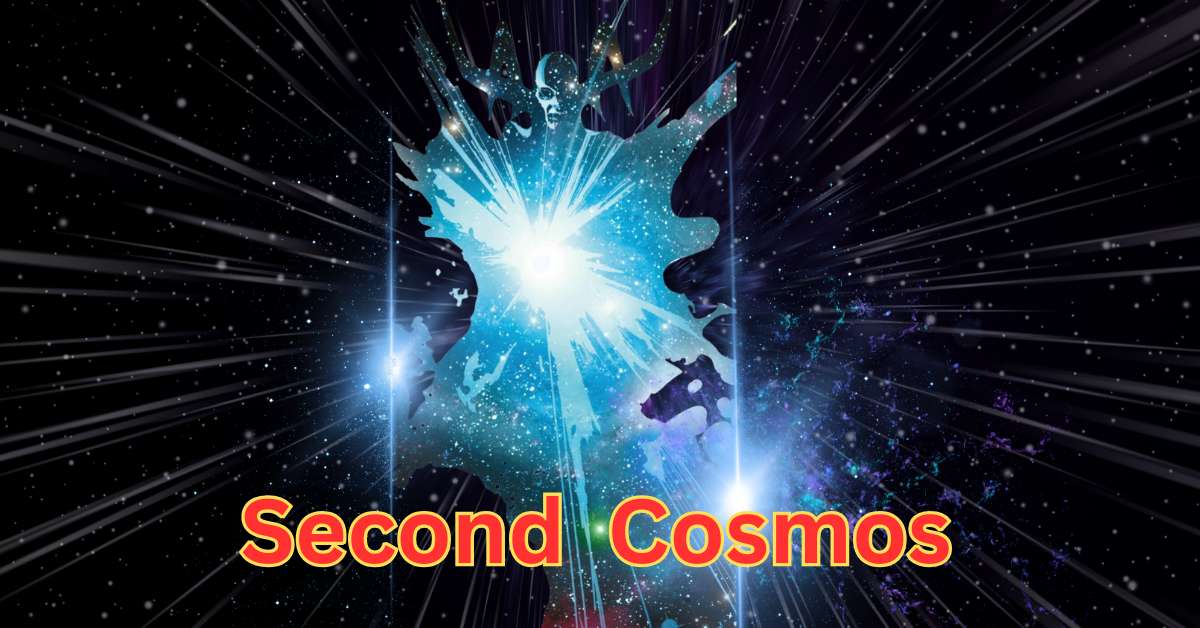
In the grand tapestry of Marvel Comics cosmology, the universe we know is just one iteration in a cycle of death and rebirth. While the First Firmament was a singular, lonely perfection, it was the Second Cosmos that changed everything. This was the birth of the very first Multiverse—a chaotic, fluid reality where “What If?” became “What Is.”
In Marvel Comics, the term “multiverse” usually refers to a single iteration of infinite realities. However, within the lore as of 2026, there have been eight distinct versions (iterations) of the multiverse throughout cosmic history, known as the Cosmos cycles.
The 8 Iterations of the Multiverse
Each “Cosmos” is the sentient manifestation of the entire multiverse during its specific era.
- First Cosmos (First Firmament): A singular, perfect universe that predated the multiverse concept. It was shattered during the Celestial War, creating the first actual Multiverse.
- Second Cosmos: The first true Multiverse. Its essence eventually became the Beyond, where the Beyonders reside.
- Third Cosmos: Represented the birth of “narrative” and the conflict between existence and non-existence.
- Fourth Cosmos: Created the basic archetypes and patterns that future heroes and villains would follow.
- Fifth Cosmos: The origin of magic and the first Sorcerer Supremes.
- Sixth Cosmos: The era of science, which ended when the universe was consumed by the Black Winter. Galan of Taa survived this era to become Galactus.
- Seventh Cosmos: The primary setting for most classic Marvel stories (1939–2015). It was destroyed during the Incursions and Secret Wars (2015).
- Eighth Cosmos: The current multiverse in 2026. It is unique because it is a direct continuation of the Seventh Cosmos, restored by Reed Richards and the Molecule Man.
If you are looking to understand the origins of the Beyonders, the King in Black, or the mysterious Omega Force, you have to start here. This guide covers everything you need to know about the Second Cosmos, the era that defined infinite possibility.
Table of Contents
- The 8 Iterations of the Multiverse
- What Was the Second Cosmos?
- The Origins: From Singularity to Multiplicity
- Powerful Beings from the Second Cosmos
- Emergence of Eternity and Infinity
- Deep Lore: The Omega Force & Concordance Engines
- The End: The Desire for “All-Death”
- The Curiosity of Death: Why the Second Cosmos Ended
- Transition to the Third Cosmos
- FAQ
- Check The first Firmament / First Cosmos blog and other related blogs
- Final Thoughts
- FAQ’s
What Was the Second Cosmos?
The Second Cosmos was the second iteration of existence, but historically, it was the First Multiverse.
Born from the violent shattering of the First Firmament during the Celestial War, this cosmos was defined by fluidity and instability. Unlike the static nature of its predecessor, the Second Cosmos was a place where physical laws were shifting, and new realities were born every second. It was an experiment in uncontrolled creation, where the concept of a “Multiverse” was first tested by the Celestials.
The Origins: From Singularity to Multiplicity
The story of the Second Cosmos begins with the Celestial War.
The First Firmament (the sentient embodiment of the First Cosmos) was a jealous and solitary being. When its creations, the Celestials, rebelled against it in favor of change and evolution, a cosmic war erupted. The Celestials detonated their ultimate weapons, shattering the First Firmament into countless shards.
These shards did not die; they coalesced into the Second Cosmos. Instead of one single universe, existence was now composed of infinite, divergent realities. The Celestials had won, but they had created a “primordial soup” of possibilities that threatened to tear itself apart.
Powerful Beings from the Second Cosmos
To manage this chaotic new Multiverse, the Celestials engineered powerful servitors. This era gave rise to some of the most potent entities in Marvel history, establishing a balance between the “Kings in White” and the “Kings in Black.”
Here are the key players from this primordial era:
| Entity Name | Title / Role | Origin | Key Power / Function |
| The Celestials | The Architects | Survivors of the First Cosmos | Colonized the Second Cosmos; created the Omegas and the King in Black to manage reality. |
| The Omegas (Beyonders) | Kings in White / Gardeners | Created by Celestials (Servitors) | Maintenance of the Multiverse from the “Outside”; wielders of the Omega Force.[] |
| Knull | King in Black / Onyx King | God of the Void | Appointed by Celestials to manage the “Inside” (Entropy/Void); created the Necrosword. |
| Second Cosmos (Entity) | The Sentient Multiverse | The First Multiverse | The embodiment of infinite possibility; originator of the Omega Force. |
The Omegas (The Beyonders)
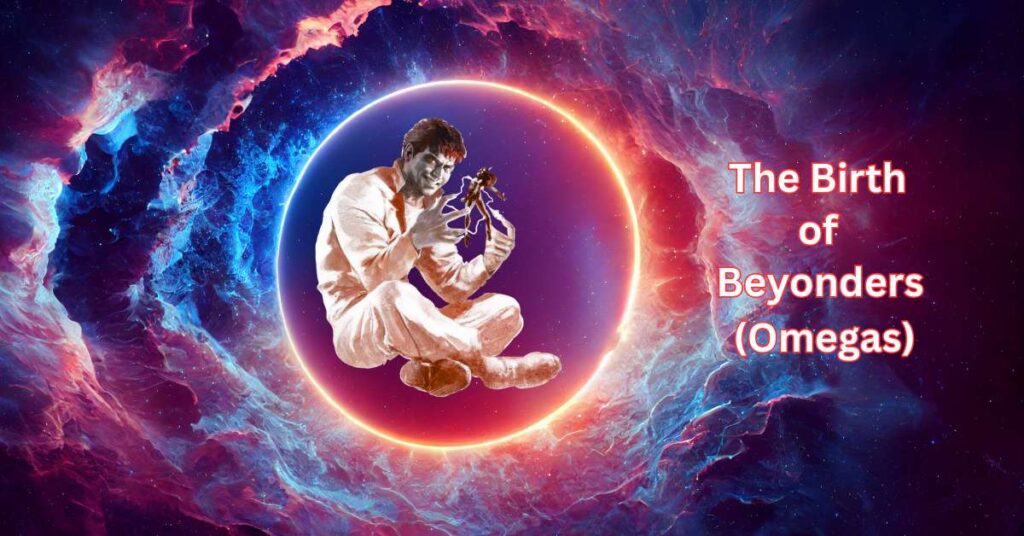
Originally created as “Omegas,” these beings were the gardeners of the multiverse. They used the Light of Concordance to structure reality and prune unstable timelines. When the Second Cosmos ended, they refused to move on, evolving into the Beyonders (or Ivory Kings) who reside in “The Beyond.”
To protect the Multiverse from collapse, the Celestials created beings of unimaginable power:
Originally known as the Omegas, the Beyonders were designed as:
- External regulators of the Multiverse
- Living failsafes capable of destroying Celestials if necessary
- Beings powered by the Omega Force
Crucially, the Beyonders existed outside the Multiverse, observing it from a realm beyond space and time.
This realm would later become known as The Beyond.
The King in Black
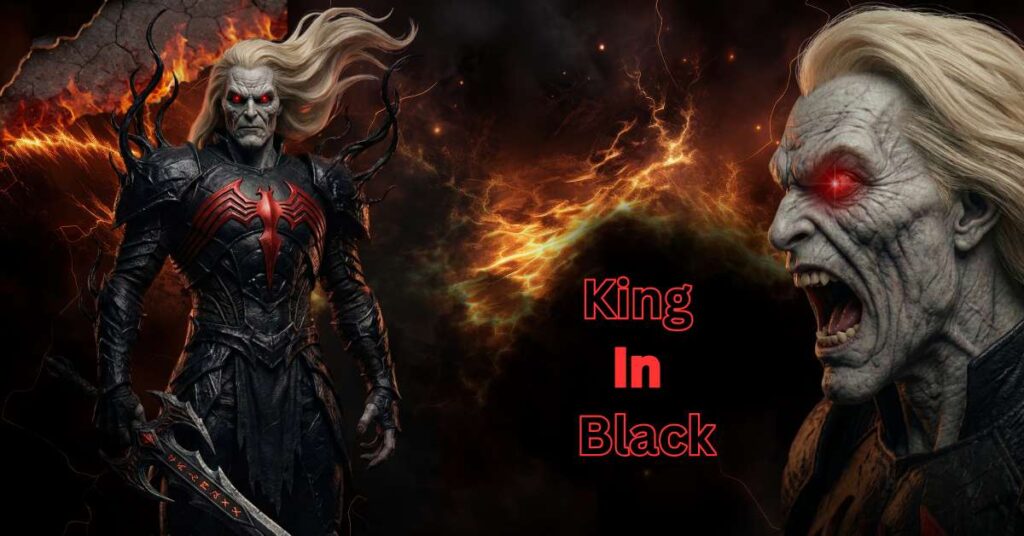
To balance the light of the Omegas, the Celestials needed a force of necessary destruction—a “composter” for dead universes. They recruited Knull to serve as the King in Black. While the Omegas maintained structure, the King in Black was meant to manage the Living Abyss, though Knull eventually rebelled against his creators.
Balance was still incomplete.
To counter external threats like the Beyonders, the Celestials introduced a force from within reality itself:
- Born from the Living Abyss
- Represented primordial darkness and entropy
- Reincarnated in every subsequent Cosmos
Knull’s role was to act as an internal corrective force, ensuring the Multiverse could defend itself without total annihilation.
Emergence of Eternity and Infinity
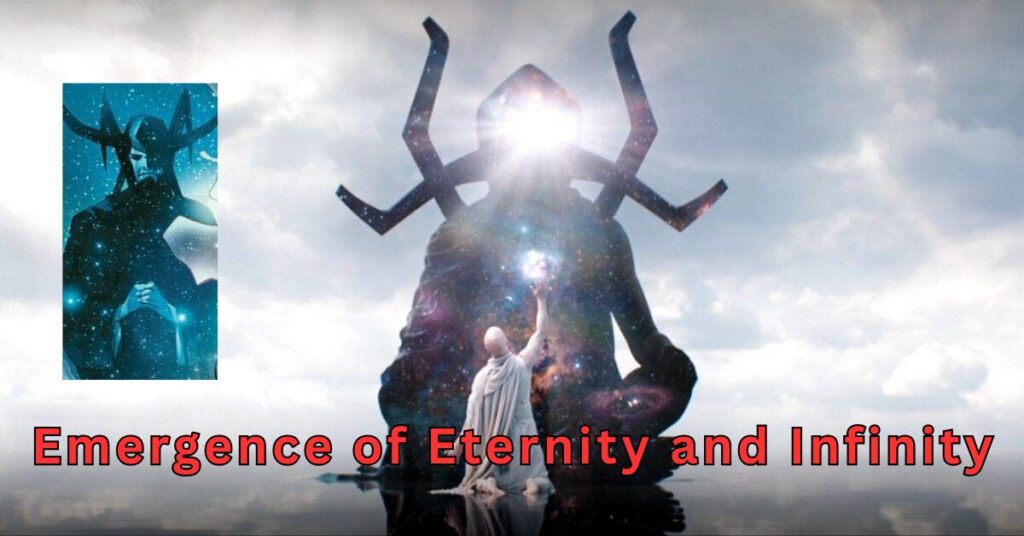
Another defining feature of the Second Cosmos Marvel era was the early manifestation of abstract entities:
- Eternity — embodiment of space and existence
- Infinity — embodiment of time and boundlessness
These entities were primitive and incomplete, still learning what existence meant in a multiversal structure.
Death, however, had not yet fully formed — and this absence would define how the Second Cosmos ended.
Deep Lore: The Omega Force & Concordance Engines
The Second Cosmos introduced metaphysical concepts that are still relevant in current comics (like Defenders: Beyond and Venom).
- The Omega Force: This is the primordial energy of the Second Cosmos. It represents the power of “infinite possibility.” The Omegas harnessed this energy to create life without limits and manipulate the narrative of existence.
- Concordance Engines: To ensure the stability of the Multiverse and defend against the return of the First Firmament’s forces (The Aspirants), the Omegas built massive machines called Concordance Engines. These engines anchored realities, preventing them from drifting into the void.[]
The End: The Desire for “All-Death”
Despite its infinite potential, the Second Cosmos had a short lifespan compared to other cycles (only a few millennia). The sentient embodiment of the Second Cosmos was childlike and curious. Having experienced everything in existence, it became fascinated by the one thing it didn’t know: Finality.
The Cosmos discovered the concept of “All-Death” and, in a fit of curiosity, willingly chose to end its own existence. It committed “cosmic suicide,” allowing the Multiverse to die so that the Third Cosmos (the era of Heroes and Magic) could be born from its ashes.
The remnants of the Second Cosmos—the empty husk left behind—became the realm known as The Beyond, the home of the Beyonders.
The Curiosity of Death: Why the Second Cosmos Ended
For the first time, the Multiverse became aware of mortality.
The personification of the Second Cosmos developed an intense fascination with death — not as an ending, but as an experience.
The All-Death
Rather than being destroyed by war or collapse, the Second Cosmos:
- Chose to die
- Actively sought its own end
- Viewed death as the next evolutionary step
This makes the Second Cosmos unique — it is the only known cosmic iteration to commit conceptual suicide.
Transition to the Third Cosmos
Upon its death:
- The consciousness of the Second Cosmos retreated to the Far Shore
- Its physical remains became The Beyond
- The Multiverse reset under new rules
The Beyond
The Beyond exists outside all subsequent realities, untouched by time, space, or narrative — and is the origin realm of the Beyonders.
- From this death, the Third Cosmos was born — introducing:
- The foundations of modern Marvel reality
- Existence vs non-existence
- Story, causality, and narrative logic
FAQ
Q: Is the Second Cosmos the same as the Beyonder’s Realm? Yes. The “Beyond” is the metaphysical corpse of the Second Cosmos. When the Second Cosmos died, the Celestials moved on, but the Omegas (Beyonders) stayed behind in the remnants, which exist outside the current Multiverse.
Q: Who is stronger, Knull or the Beyonders? Generally, the Beyonders are depicted as significantly more powerful. A single Beyonder “Child Unit” (the one from Secret Wars II) has power comparable to the strongest abstract entities. Knull was created as a counterpart, but the Beyonders destroyed the entire Seventh Cosmos, a feat far beyond Knull’s demonstrated power.
Q: Did the Celestials create the Beyonders? Yes. This was a major revelation in Defenders: Beyond. The Beyonders were originally the “Omegas,” servitors created by the Celestials to maintain the Second Cosmos.
Check The first Firmament / First Cosmos blog and other related blogs
Avengers Doomsday Opening Scene Leaks: Why Tobey Maguire vs. The
If you thought the opening of Avengers: Infinity War was brutal, you might want to brace yourself. The latest wave…
CRACKED: Avengers Doomsday Hidden Codes Reveal the Movie’s Dark Plot
If you have been watching the new Avengers: Doomsday teasers and felt like something was… off, you aren’t alone. The…
Avengers Doomsday 4th Teaser Breakdown: Doctor Doom’s Multiversal Endgame Explained
The Avengers Doomsday 4th teaser has reportedly leaked, and it finally feels like Marvel Studios is done playing small. Unlike…
Marvel’s Second Cosmos Explained: Birth of the Multiverse and the
In the grand tapestry of Marvel Comics cosmology, the universe we know is just one iteration in a cycle of…

Avengers Doomsday X-Men Teaser 3rd Week Breakdown:
What the Rumoured Theater Teaser Is Really Setting Up The hype around Avengers Doomsday X-Men teaser is growing every week, especially…
The Ultimate Avengers: Doomsday Plot Theory Explained
The Marvel Cinematic Universe (MCU) is heading toward a multiversal reckoning, and the mystery surrounding the next major Avengers film,…
Final Thoughts
The Second Cosmos was not meant to last.
It was an experiment, a bridge between absolute unity and narrative-driven existence. Its voluntary death reshaped Marvel reality forever — proving that even the Multiverse must evolve or end.
Without the Second Cosmos:
- There is no stable Eternity
- No structured Multiverse
- No cosmic narrative
It is the forgotten foundation of everything that followed.
FAQ’s
Who is the No. 1 Most Powerful Being in Marvel?
The One-Above-All (TOAA) sits above every character, entity, and concept in Marvel—across all cosmoses, multiverses, and realities.
Key reasons:
- Omnipotent – Unlimited power
- Omniscient – Knows everything
- Omnipresent – Exists everywhere at once
- Unchallengeable – No being has authority over it
TOAA is not part of the cosmic hierarchy—it defines it.
Is Eternity the 7th Cosmos?
No, Eternity is not the 7th Cosmos.
Eternity is a cosmic abstract entity, not a cosmos itself. Each cosmos has its own version of Eternity, representing all space and existence within that specific iteration of reality.
- The 7th Cosmos refers to the current Marvel Multiverse
- Eternity exists inside a cosmos, not as one
- When a cosmos ends, its version of Eternity also ends or is reborn
So, Eternity changes with the cosmos — it does not replace it.
How many cosmos are there in Marvel?
In Marvel canon, there are eight known cosmos cycles:
- First Cosmos – The age of the First Firmament
- Second Cosmos – Birth of the Multiverse
- Third Cosmos – Introduction of death and narrative
- Fourth Cosmos – Collapse into entropy
- Fifth Cosmos – Rebirth and balance
- Sixth Cosmos – Age of Galactus
- Seventh Cosmos – Current Marvel Multiverse
- Eighth Cosmos – The future reborn reality
Each cosmos ends in destruction or transformation, giving rise to the next.y of fighting and killing Celestials, the First Firmament is a being on an even higher tier of cosmic power. It’s the equivalent of a universe fighting a powerful being within that universe.
What are the 4 cosmic entities in Marvel?
The four primary cosmic abstracts that define Marvel reality are:
- Eternity – Embodiment of all space and existence
- Infinity – Representation of time and boundlessness
- Death – Personification of mortality and endings
- Oblivion – The void beyond existence and non-existence
These entities change form across different cosmoses, but their roles remain fundamental to Marvel’s cosmic structure.